How a 2D Foot Scanner Helps Create Better Footwear
Every Foot Tells a Different Story
No two feet are exactly alike. Some people have wide feet, while others have narrow feet. Some have high arches, flat feet, or uneven pressure distribution when they walk. These differences may seem small, but they can significantly affect comfort, balance, and overall foot health.
This is why customized footwear and orthotic solutions are becoming increasingly important. One of the most effective tools used in this process is the 2D Foot Scanner.
What is a 2D foot scanner?
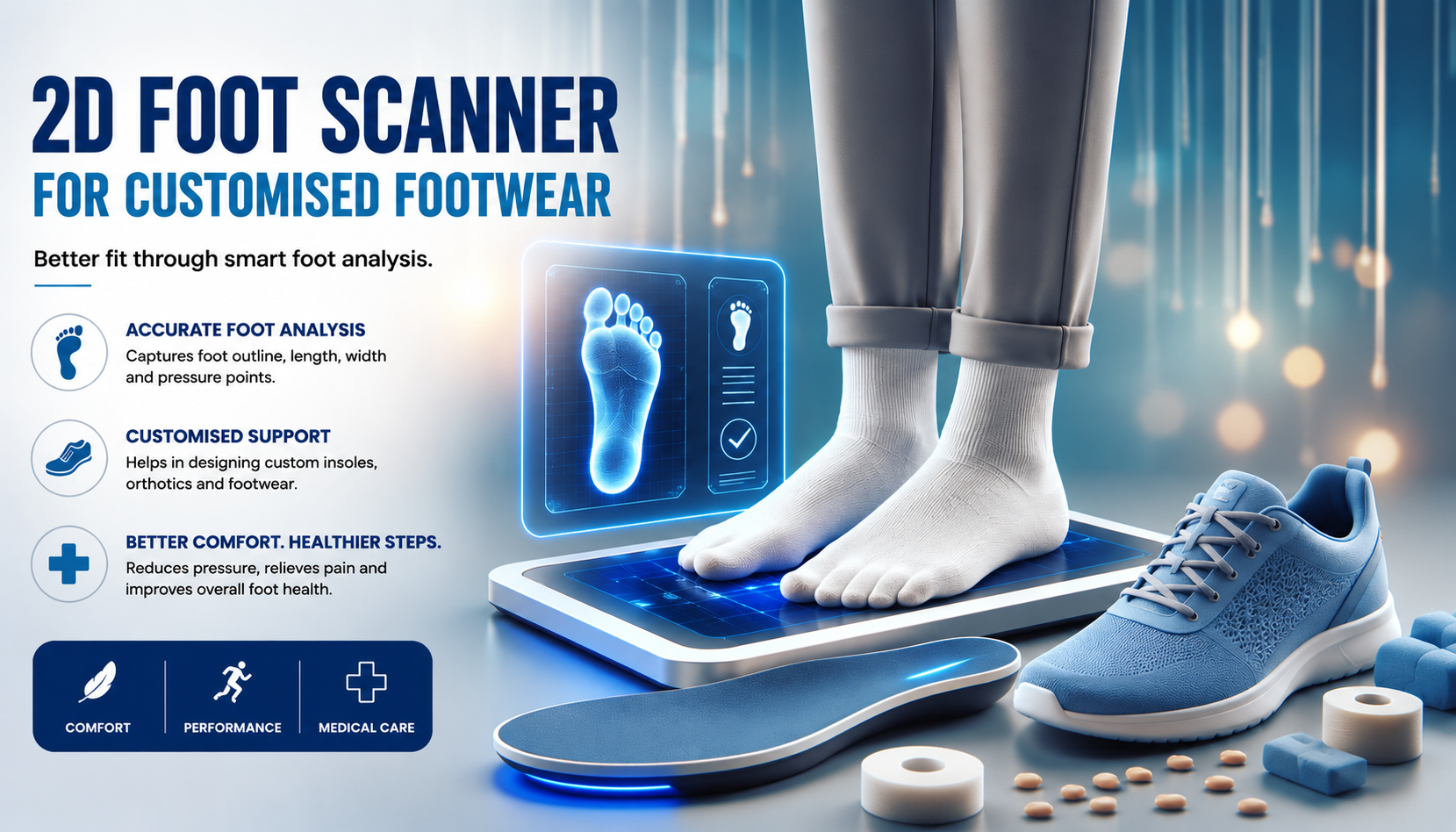
A 2D foot scanner is a technology that captures the shape and pressure characteristics of the foot from a two-dimensional perspective. It provides valuable information about:
- Foot length and width
- Foot outline and shape
- Arch characteristics
- Pressure distribution across the sole
- High-pressure and low-pressure areas
- Weight-bearing patterns
These measurements help clinicians and footwear specialists understand how a person stands and walks, enabling them to create more personalized footwear solutions.
How Does 2D Foot Scanning Work?
The scanning process is quick, simple, and non-invasive. The individual stands on or places their foot on a scanning platform, and the system captures detailed images and pressure information.
Several technologies can be used for 2D foot scanning:
1. Image-Based Foot Scanning
High-resolution images are used to capture the foot’s dimensions and outline.
2. Podoscan Systems
These specialized scanners provide a clear view of the plantar (sole) surface of the foot, helping identify structural characteristics.
3. Smartphone-Based Foot Scanning
Modern mobile applications can capture foot measurements using smartphone cameras, making foot assessment more accessible.
4. Pressure Plate Analysis
Pressure-sensitive platforms record how body weight is distributed across different parts of the foot, highlighting areas of excessive pressure.
Why Is Foot Pressure Analysis Important?
Foot pressure analysis helps identify areas that experience excessive loading during standing and walking.
Common pressure concentration areas include:
- Heel
- Ball of the foot
- Toes
- Outer border of the foot
- Arch region
Excessive pressure in these areas can contribute to:
- Foot pain
- Callus formation
- Corns
- Balance issues
- Walking discomfort
- Increased risk of foot ulcers in diabetic patients
By identifying these pressure points, healthcare professionals can recommend appropriate footwear modifications and customized insoles.
Benefits of 2D Foot Scanning
Improved Footwear Customization
Accurate measurements allow footwear to be designed according to the individual’s unique foot structure.
Better Orthotic Design
Customized insoles and orthotics can be created to provide targeted support and pressure redistribution.
Enhanced Comfort
Properly fitted footwear reduces discomfort and improves daily mobility.
Pressure Relief
High-pressure zones can be identified and offloaded, reducing strain on vulnerable areas.
Quick and Cost-Effective
Compared to advanced 3D scanning systems, 2D scanning is generally faster, simpler, and more affordable.
Who Can Benefit from 2D Foot Scanning?
Diabetic Patients
People with diabetes often experience reduced sensation and are at higher risk of foot ulcers. Pressure mapping helps identify risk areas early and supports preventive care.
Athletes
Athletes can benefit from customized footwear and orthotics that improve performance, comfort, and injury prevention.
Individuals with Foot Pain
People suffering from heel pain, plantar fasciitis, metatarsalgia, or arch-related problems can receive more personalized support.
Elderly Individuals
Proper footwear design can improve balance, reduce discomfort, and help prevent falls.
2D Foot Scanning vs. 3D Foot Scanning
| Feature | 2D Foot Scanning | 3D Foot Scanning |
|---|---|---|
| Speed | Fast | Moderate |
| Cost | Affordable | Higher |
| Pressure Analysis | Excellent | Limited unless combined with pressure systems |
| Ease of Use | Simple | More complex |
| Clinical Footwear Applications | Highly useful | Highly useful |
While 3D scanning provides detailed volumetric information, 2D scanning remains an excellent choice for many clinical and footwear applications due to its efficiency and practicality.
The Future of Personalized Footwear
Advancements in foot scanning technology are making personalized footwear more accessible than ever. By combining foot shape measurements with pressure analysis, clinicians can create solutions that improve comfort, support, and foot health.
Whether it’s a diabetic patient requiring pressure offloading, an athlete seeking better performance, or someone simply looking for improved comfort, 2D foot scanning plays a valuable role in delivering footwear that truly fits.
Conclusion
A 2D foot scanner is more than just a measurement tool—it is a gateway to smarter, more personalized foot care. By capturing foot dimensions and pressure patterns, it helps healthcare professionals design customized insoles, orthotics, and footwear tailored to individual needs.
Because when footwear understands your feet, every step becomes safer, healthier, and more comfortable.
CDFC HOSPITAL (Chennai Diabetic Foot Care Centre) specializes in advanced foot assessment, diabetic foot care, customized footwear solutions, and pressure-offloading techniques to help patients walk with confidence and comfort.
#2DFootScanner #CustomFootwear #OrthoticInsoles #DiabeticFootCare #FootPressureAnalysis #FootHealth #CustomInsoles #PressureMapping #FootwearTechnology #CDFCHospital