What Is Diabetic Foot Screening?
Diabetic foot screening uses advanced non-invasive diagnostic tests—specifically Biothesiometry and Ankle-Brachial Index (ABI)—to assess nerve damage and circulation status in your feet. Early detection identifies hidden risks before numbness, poor blood flow, or subtle injuries progress into open ulcers.Common Symptoms Indicating Need for Screening
Diabetes history over 5 years · Tingling, burning, or loss of sensation in toes or feet · Cold feet or pale skin tone · Diminished foot pulses · History of foot calluses, corns, or prior ulcersOur Treatment Approach
Digital Biothesiometry to measure vibration perception thresholds (detecting neuropathy early) → ABI & Doppler ultrasound to quantify arterial blood flow → plantary pressure scan → foot risk stratification (Low / Moderate / High Risk) → preventive footwear prescription.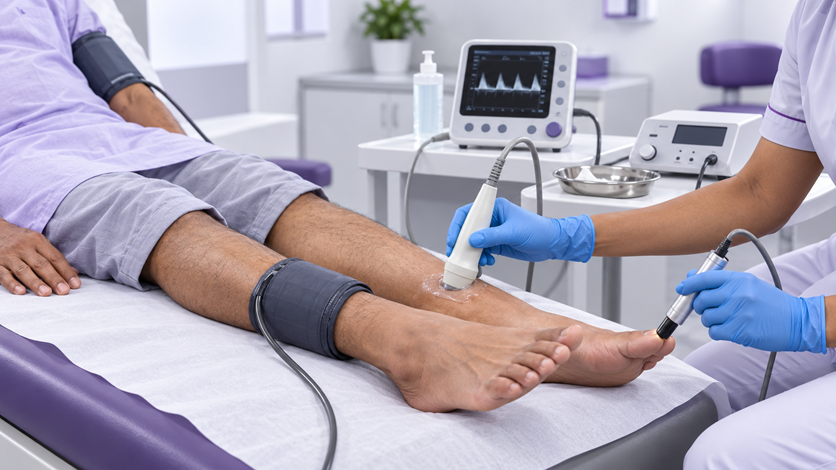
Frequently Asked Questions
How often should a diabetic patient get a foot screening?
Every individual with diabetes should undergo a professional podiatric foot screening at least once a year, or every 3–6 months if high-risk factors like neuropathy are present.
Are ABI and Biothesiometry tests painful?
Both tests are completely non-invasive, painless, and take only 15–20 minutes to complete.