What Is Bone Curettage & Exostosis Removal?
Bone curettage is a surgical procedure where infected, necrotic, or abnormal bone tissue is precisely scraped away while preserving healthy bone structure. Exostosis removal involves trimming painful, abnormal bony overgrowths (bone spurs) that press against soft tissues, create chronic calluses, or trigger recurring foot ulcers.Common Symptoms
Localized deep bone infection (osteomyelitis) underlying a diabetic ulcer · A hard, bony bump under the foot or toe rubbing against footwear · Persistent localized pain and recurring skin breakdown over a bony prominence · Chronic wound drainage originating from underlying boneOur Treatment Approach
High-resolution X-ray / CT bone mapping → precision surgical curettage/exostectomy under local or regional anesthesia → antibiotic bone cement application if infection is present → structural offloading and wound closure.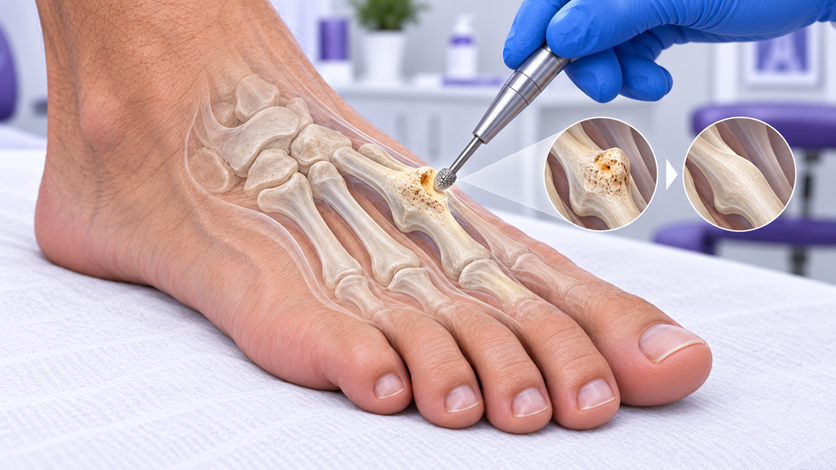
Frequently Asked Questions
How does removing a bone spur prevent recurring ulcers?
Abnormal bone spurs act like internal pressure points. Removing the excess bone eliminates the pressure against the skin, allowing ulcers to close permanently.
Is bone curettage performed under general anesthesia?
Most podiatric bone procedures can be performed comfortably under regional nerve blocks or local anesthesia without full general anesthesia.