Introduction: The Invisible Threat to Diabetic Feet
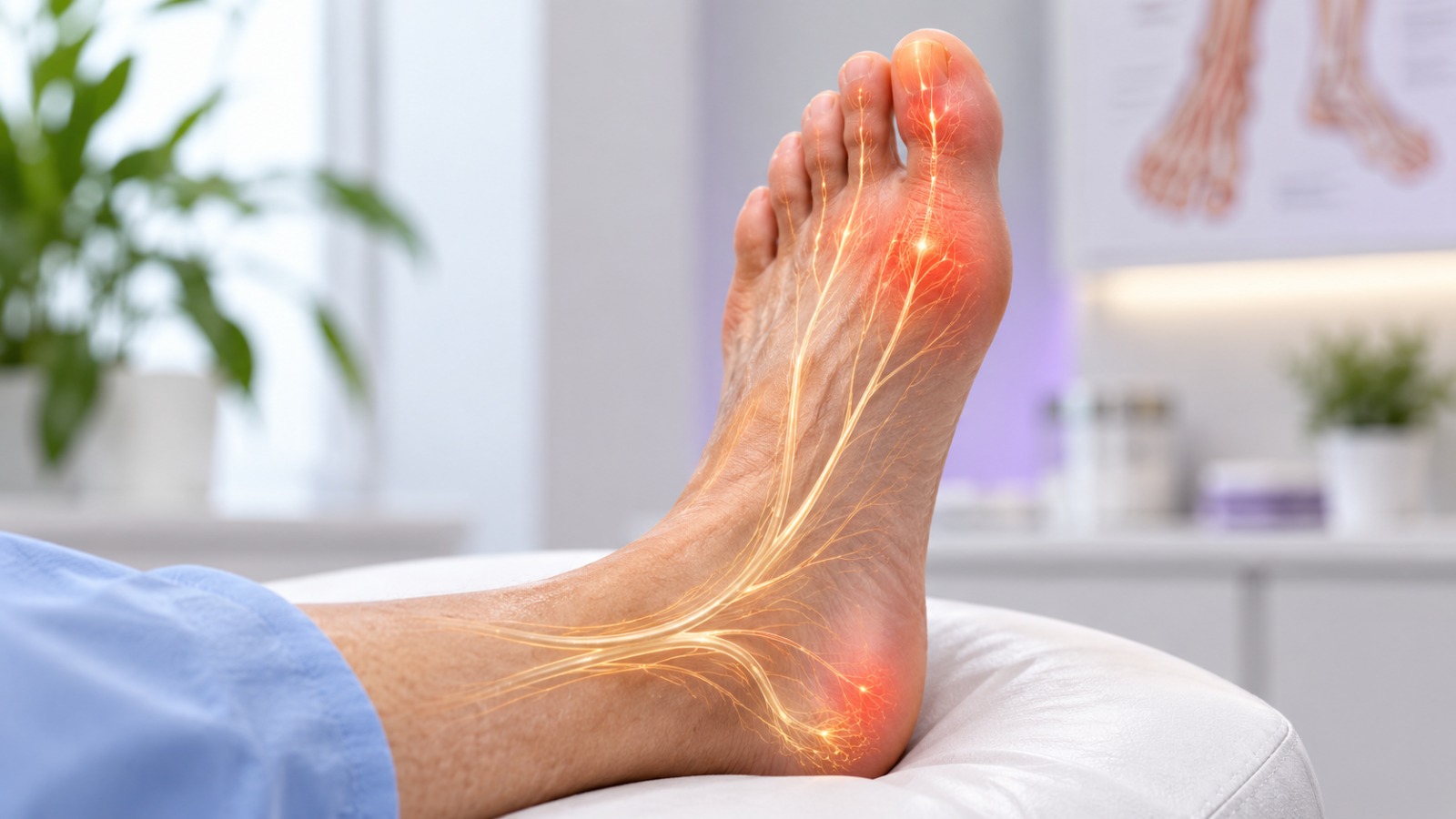
Walking on carpet but feeling as though you are stepping on thick layers of cotton wool. Or lying in bed at night feeling intense, burning pain or “pins and needles” in your toes, even though your feet look completely normal on the surface. These are classic symptoms of Diabetic Peripheral Neuropathy (DPN)—a progressive nerve disorder affecting up to 50% of individuals with long-standing diabetes.
Because nerve damage develops slowly, many patients in Chennai adapt to gradual loss of feeling without realizing their feet are becoming vulnerable. At CDFC Hospital (Kilpauk, Chennai), we specialize in diagnosing and managing all stages of diabetic neuropathy. Uncovering nerve loss early is the most critical step in preventing silent foot injuries, ulcers, and long-term disability.
The Biological Pathways: How High Blood Sugar Damages Nerves
Peripheral neuropathy is not simply “poor blood flow”—it is direct biochemical and structural damage to the delicate nerve fibers that transmit signals between your lower amputations and brain.
The Three Types of Diabetic Neuropathy Affecting Lower Limbs
Advanced Neuropathy Diagnostics at Dr. Prem’s Podolab
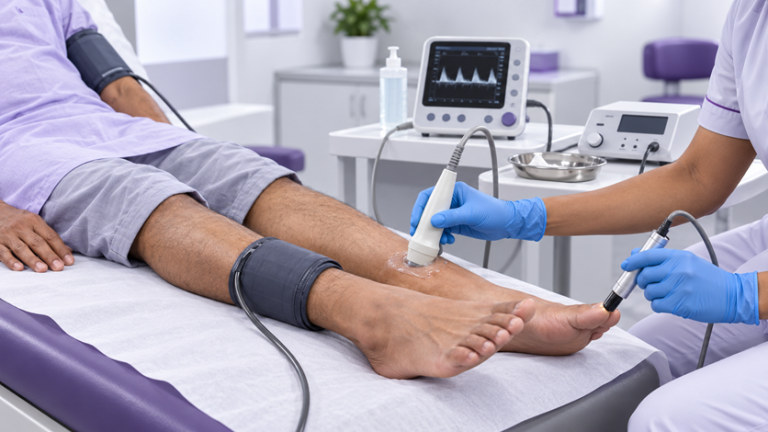
At CDFC Hospital in Kilpauk, we do not rely on simple pin-prick tests alone. Our specialized diagnostic lab (Dr. Prem’s Podolab) utilizes advanced, objective technology to quantify nerve damage precisely:
| Diagnostic Tool | Clinical Assessment | Medical Value |
| Digital Biothesiometry | Measures Vibration Perception Threshold (VPT) in volts. | Identifies subtle sensory loss long before total numbness sets in. |
| Monofilament Testing (10g) | Tests sensory perception at key plantar hotspots. | Confirms presence or absence of Loss of Protective Sensation. |
| Monothermal & Temperature Scans | Tests thermal perception thresholds (hot vs. cold). | Evaluates small-fiber nerve degradation. |
| Plantar Pressure Analysis | Maps weight distribution during walking. | Detects high-pressure zones resulting from motor neuropathy shifts. |