Introduction: Understanding Varicose Veins Beyond Cosmetics
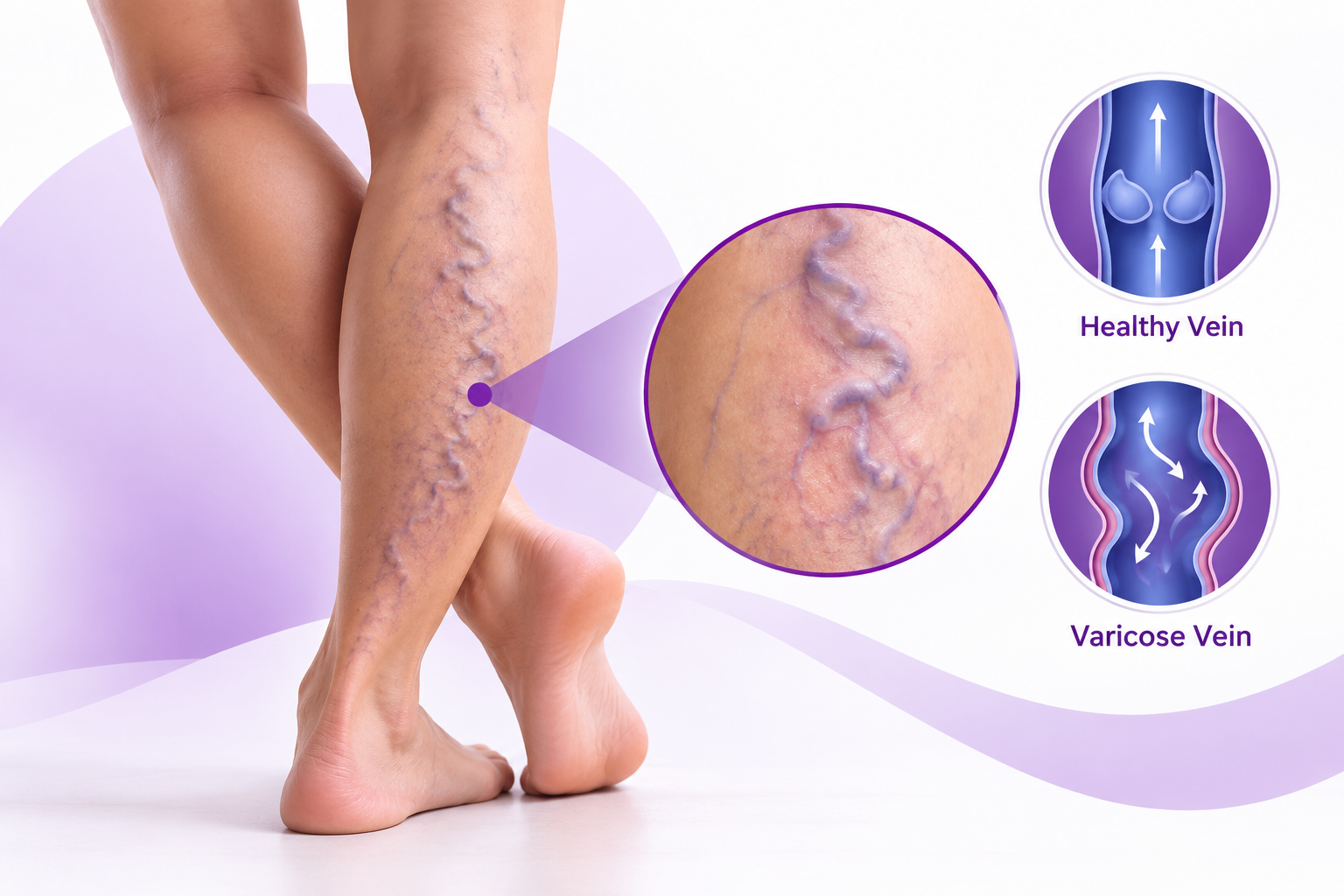
Varicose veins are frequently misunderstood as merely a cosmetic issue involving unsightly, bulged veins on the calves and thighs. In reality, varicose veins represent a progressive vascular disorder known as Chronic Venous Insufficiency (CVI). Left untreated, high pressure in the lower leg veins causes persistent swelling, severe pain, skin darkening (stasis dermatitis), and eventually painful, non-healing venous leg ulcers.
For decades, the standard medical intervention for severe varicose veins was a major surgical procedure known as “vein stripping.” Today, medical technology has evolved. At Chennai Varicose Vein Clinic (a specialized division of CDFC Hospital, Kilpauk), traditional open surgery has been replaced by advanced, minimally invasive Endovenous Laser Treatment (EVLT). This guide details the differences between old surgical methods and modern laser therapy.
The Anatomy of Venous Insufficiency
Unlike arteries, which carry oxygen-rich blood away from the heart under high pressure, veins carry deoxygenated blood back up to the heart against gravity. To achieve this, veins contain delicate one-way valves that open to allow blood upward and close to prevent it from flowing backward.
When these internal valves become weak or damaged—due to prolonged standing, aging, genetics, pregnancy, or obesity—blood flows backward and pools in the lower legs. This pooling (venous reflux) increases pressure inside the veins, causing them to stretch, twist, and leak fluid into surrounding tissues.
Head-to-Head Comparison: Traditional Stripping vs. EVLT Laser
| Treatment Attribute | Traditional Vein Stripping (Old Method) | Endovenous Laser Treatment (EVLT at CDFC) |
| Surgical Technique | Multiple deep groin and leg incisions; vein physically pulled out. | Single needle puncture; thin laser fiber inserted inside vein. |
| Anesthesia Type | General or spinal anesthesia requiring fasting and stay. | Local tumescent anesthesia (patient remains fully awake). |
| Procedure Time | 2 to 3 hours in a major operating theatre. | 30 to 45 minutes as an outpatient daycare procedure. |
| Post-Op Pain & Bruising | Significant pain, extensive bruising, and swelling. | Minimal discomfort; mild feeling of tightness. |
| Recovery Period | 2 to 4 weeks of strict bed rest and restricted movement. | Immediate walking; return to normal work within 24–48 hours. |
| Surgical Scarring | Multiple permanent visible scars along groin and leg. | No visible surgical scars (tiny needle entry mark vanishes). |
| Success / Recurrence Rate | Higher recurrence rate due to surgical neovascularization. | Over 95–98% long-term closure success rate. |
How Endovenous Laser Treatment (EVLT) Works at CDFC Hospital
At CDFC Hospital in Kilpauk, EVLT is performed in a comfortable, sterile daycare setting. Here is a step-by-step overview of the procedure:
- Ultrasound Mapping: Using high-resolution duplex ultrasound, our vascular specialist maps the exact veins that have failing valves.
- Micro-Entry Access: Under local anesthesia, a tiny hollow needle is inserted into the target vein, usually near the knee or ankle.
- Laser Fiber Placement: An ultra-thin laser fiber is guided through the vein under real-time ultrasound guidance.
- Tumescent Local Anesthesia: A specialized numbing fluid is injected around the vein. This cushions surrounding tissues, eliminates heat sensation, and compresses the vein around the laser fiber.
- Targeted Thermal Closure: As the laser fiber is gently withdrawn, precise thermal energy seals the diseased vein shut permanently.
- Natural Circulation Rerouting: Once the bad vein is closed, blood automatically reroutes through neighboring healthy, deep veins, instantly lowering pressure in the leg.
- Immediate Discharge: A compression bandage is applied, and the patient is asked to walk around immediately to encourage healthy deep circulation. You can go home the same afternoon.
Venous Ulcers: Curing the Cause, Not Just the Wound
One of the greatest advantages of EVLT at CDFC Hospital is its ability to heal chronic venous leg ulcers.
For years, patients with venous ulcers undergo endless wound dressings that fail because the underlying high vein pressure continues to push fluid and toxins into the skin. By closing the diseased vein with laser therapy, pressure at the ankle drops instantly. Combined with our specialized compression therapy and podiatric wound care, chronic venous ulcers that persisted for years often heal completely within weeks.
Who Is an Ideal Candidate for Laser Vein Treatment?
You should consider an EVLT evaluation at Chennai Varicose Vein Clinic if you experience:
- Heaviness, aching, or throbbing pain in the legs that worsens by evening.
- Visible, twisted, blue, or purplish bulged veins on calves or thighs.
- Swelling around the ankles that improves after elevated rest.
- Darkening, browning, or hardening of skin on the lower calf (lipodermatosclerosis).
- Non-healing sores or ulcers located above the inner ankle bone.
Say Goodbye to Heavy, Painful Legs
Don’t let varicose veins limit your active lifestyle or lead to painful skin ulcers. Experience quick, painless laser vein closure at CDFC Hospital, Kilpauk.
Book Your Vascular Ultrasound & Consultation: +91 98405 25242 | IVR: 8939 55 8939