Introduction: A Small Toe with Severe Pain
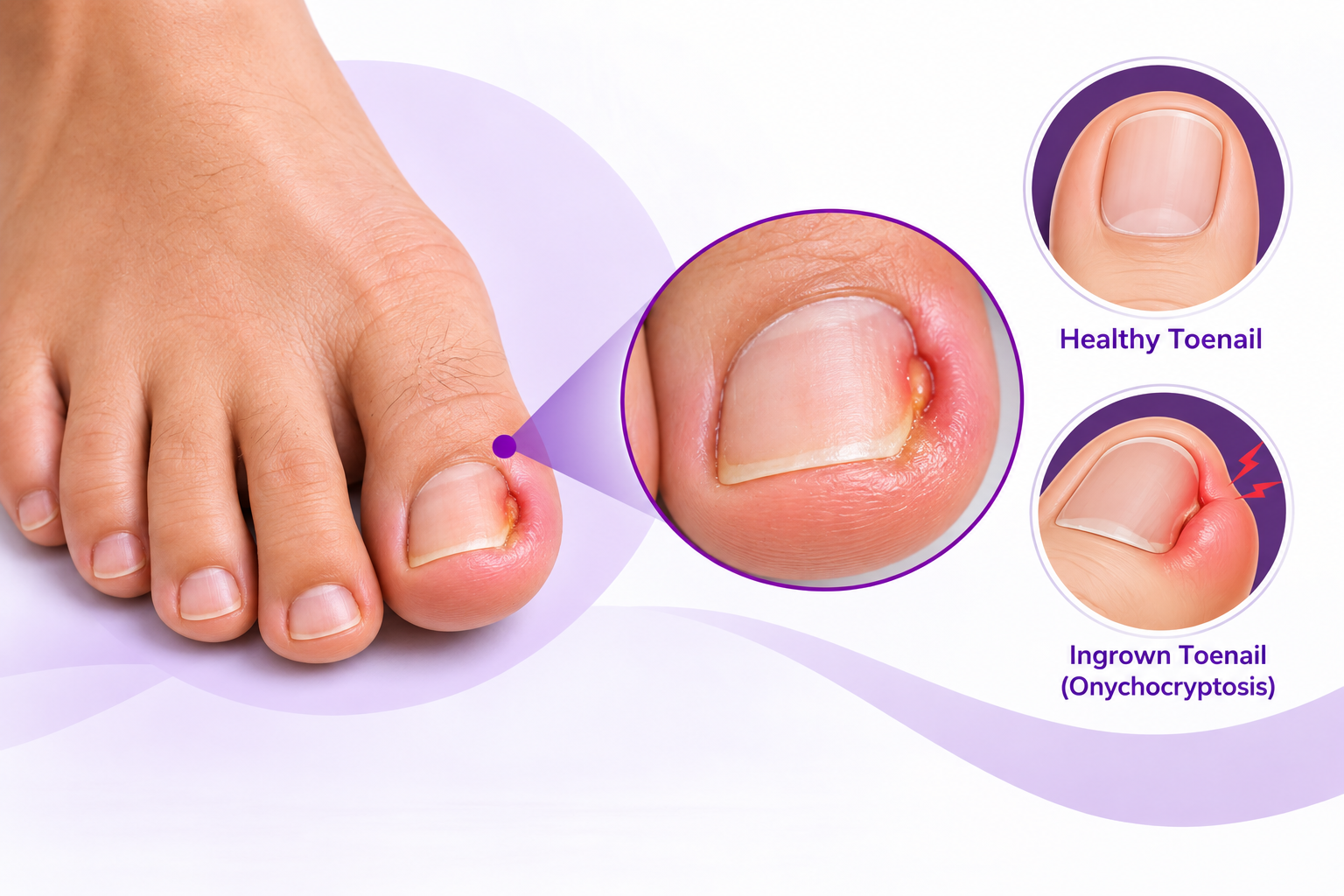
An ingrown toenail (known clinically as onychocryptosis) may sound like a minor annoyance, but anyone who has experienced one knows the reality: it can be excruciatingly painful. Every step becomes painful, wearing closed shoes becomes nearly impossible, and even the weight of a bedsheet at night can cause sharp pain.
When an ingrown toenail becomes infected, the surrounding tissue becomes red, swollen, and prone to bleeding or pus discharge (paronychia). While many individuals attempt dangerous home remedies—such as cutting the nail deeper with bathroom clippers or using chemical plasters—these temporary fixes almost always make the problem worse. At CDFC Hospital (Kilpauk, Chennai), our podiatrists provide gentle, permanent solutions that resolve the infection and prevent the nail from ever growing inward again.
What Causes an Ingrown Toenail?
An ingrown toenail occurs when the side edge of the nail plate curved downward and pierces the surrounding soft skin fold (nail border). The human body perceives the invading nail edge as a foreign object, triggering a continuous inflammatory reaction.
The Permanent Solution: Partial Nail Avulsion with Chemical Matrixectomy
At CDFC Hospital, we do not believe in pulling out the entire toenail unless absolutely necessary. Whole-nail removal is painful, alters toe aesthetics, and often results in the new nail growing back equally deformed.
Instead, our podiatrists perform a precise, micro-procedure called Partial Nail Avulsion with Chemical Matrixectomy. This 20-minute, painless procedure permanently fixes the offending corner while leaving 80–90% of your natural, healthy nail completely intact.
Step-by-Step Procedure Guide:
- Painless Digital Nerve Block: Local anesthesia is injected at the base of the toe. Within two minutes, the toe is completely numb. You feel zero pain during the procedure.
- Selective Edge Removal: Using specialized podiatric instruments, the doctor slides along the ingrown border and removes only the narrow, offending sliver of nail (1 to 2 millimeters wide) from root to tip.
- Chemical Root Cauterization (Matrixectomy): A specialized chemical agent (such as medical-grade phenol) is applied precisely to the exposed nail root (matrix) for a few seconds. This permanently deactivates only the tiny portion of root responsible for growing the ingrown edge, preventing future regrowth.
- Sterile Dressing: No stitches or major bandages are needed. A small, protective dressing is applied, and you walk out of the clinic in your comfortable footwear immediately.
Why Diabetic Patients Must Seek Immediate Professional Care
For individuals living with diabetes, an ingrown toenail is a medical emergency.
Due to reduced peripheral circulation and sensory loss, a small nail breach can rapidly transform into deep tissue cellulitis, osteomyelitis (bone infection), or localized gangrene. Never attempt self-treatment on a diabetic toe. At CDFC Hospital, ingrown toenails in diabetic patients are managed under strict sterile conditions with integrated wound care protocols.
End Recurring Toenail Pain Permanently
Stop dealing with infected, painful toenails. Experience gentle, permanent relief at CDFC Hospital in Kilpauk.
Book Your 20-Minute In-Clinic Procedure: +91 98405 25242 | IVR: 044 4770 4200